
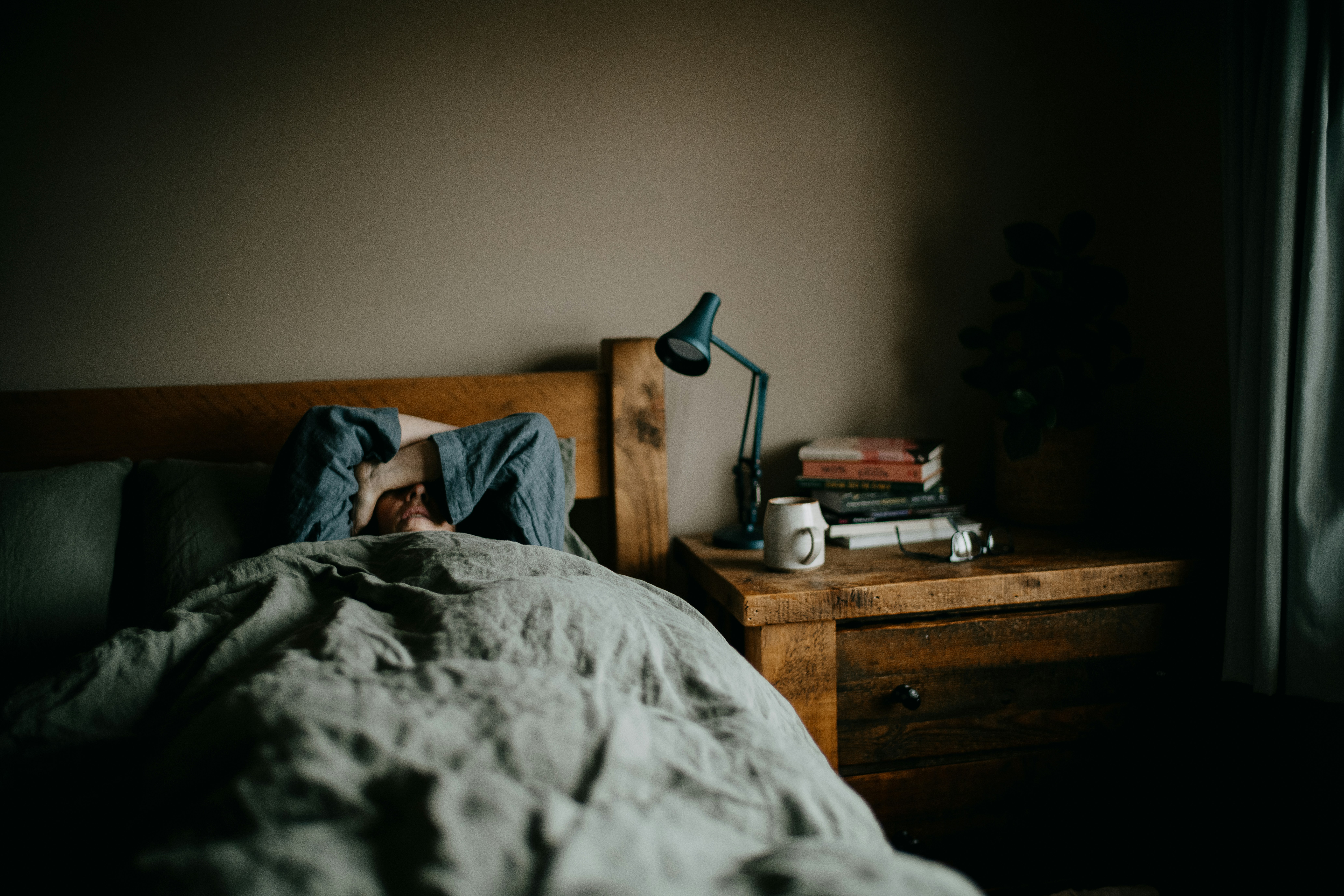
It’s 11 PM. You’re exhausted from the day, but the moment your head hits the pillow, your mind starts racing. Yesterday’s conversations replay on loop. Tomorrow’s to-do list grows longer by the minute. Your heart pounds as you lie there wondering why anxiety always seems to strike hardest when you’re trying to rest.
You’re not alone in this experience. Research shows that anxiety symptoms intensify for 73% of people during evening hours, creating what sleep specialists call “bedtime anxiety” or “nighttime rumination.” But understanding why this happens—and what you can do about it—can help you reclaim peaceful nights.
The Science Behind Nighttime Anxiety Spirals
Your brain doesn’t suddenly decide to torture you at bedtime. Several biological and psychological factors converge to create the perfect storm for nighttime anxiety.
Cortisol’s Daily Dance
Throughout the day, your stress hormone cortisol follows a predictable pattern. It peaks in the morning to help you wake up and face challenges, then gradually decreases toward evening. However, when you’re dealing with chronic stress or anxiety, this natural rhythm gets disrupted.
Dr. Matthew Walker’s research at UC Berkeley reveals that people with anxiety disorders often experience a “cortisol rebound” in the evening—a secondary spike that should normally be absent. This biochemical surge primes your nervous system for alertness just when it should be winding down.
The Attention Economy of a Tired Mind
During busy days, your prefrontal cortex—the brain’s CEO responsible for rational thinking—works overtime managing tasks, deadlines, and social interactions. By evening, this mental executive is exhausted, leaving the limbic system (your emotional brain) to run the show.
Think of it like having a tired security guard at the gate of your thoughts. The usual filters that help you dismiss irrational worries during the day simply aren’t functioning at full capacity. Suddenly, that offhand comment from your coworker becomes evidence that everyone dislikes you.
Why Your Brain Chooses 2 AM for Its Worst-Case Scenario Theater
There’s actually an evolutionary explanation for nighttime anxiety. Our ancestors needed to stay alert for potential threats during vulnerable sleeping hours. While we no longer face prowling predators, our brains still treat uncertainty as danger—and nighttime amplifies this ancient alarm system.
Modern life adds fuel to this fire. The day’s accumulated microstresses—unanswered emails, financial concerns, relationship tensions—all compete for processing time once external distractions fade. Your mind essentially says, “Finally, some quiet time to worry about everything at once!”
The Rumination Trap
Nighttime anxiety often involves rumination—repetitively thinking about problems without reaching solutions. Dr. Susan Nolen-Hoeksema’s groundbreaking research shows that rumination actually strengthens neural pathways associated with negative thinking, making it easier to fall into these patterns over time.
The darkness compounds this effect. Without visual stimuli and daytime activities to anchor your thoughts in the present moment, your mind is free to time-travel between past regrets and future fears. This mental time travel rarely leads anywhere productive—it just deepens the anxiety groove.
Breaking Free: Evidence-Based Strategies That Actually Work
The good news? Nighttime anxiety responds well to targeted interventions. Here are proven strategies that address both the symptoms and underlying causes:
The 10-3-2-1-0 Wind-Down Protocol
This systematic approach helps your nervous system transition from day mode to night mode:
- 10 hours before bed: No more caffeine (yes, that afternoon coffee affects your sleep)
- 3 hours before bed: No more large meals or alcohol
- 2 hours before bed: No more work-related activities
- 1 hour before bed: No more screens (blue light disrupts melatonin production)
- 0: The number of times you hit snooze the next morning
The Worry Window Technique
Instead of battling anxious thoughts at bedtime, schedule them for earlier in the day. Set aside 15 minutes each evening (ideally 2-3 hours before sleep) as your designated “worry time.” Write down concerns, brainstorm solutions, or simply acknowledge what’s bothering you.
When worries surface at bedtime, remind yourself: “I already handled this during worry time. If it’s truly urgent, I can address it tomorrow.” This technique, developed by cognitive behavioral therapists, helps contain anxiety rather than eliminate it entirely—a more realistic and sustainable approach.
Progressive Muscle Relaxation with a Twist
Traditional PMR involves tensing and releasing muscle groups, but anxiety often makes this feel forced. Try “scan and soften” instead: mentally scan your body from head to toe, noticing areas of tension without judgment, then imagine breathing warmth and relaxation into those spots.
Start with your forehead and temples (where many people hold stress), then move through your jaw, shoulders, chest, arms, abdomen, and legs. This gentler approach works with your body’s natural relaxation response rather than forcing it.
When Professional Support Makes the Difference
Sometimes nighttime anxiety signals deeper patterns that benefit from professional guidance. Consider reaching out if you experience:
- Panic attacks specifically at bedtime or during the night
- Chronic insomnia lasting more than two weeks
- Anxiety that’s affecting your daytime functioning
- Physical symptoms like chest pain, rapid heartbeat, or difficulty breathing
As discussed in our article on Understanding Anxiety: Why Your Body Feels on High Alert and How to Calm It, anxiety often involves both psychological and physiological components that respond well to integrated treatment approaches.
Cognitive Behavioral Therapy for Insomnia (CBT-I) has shown particular effectiveness for nighttime anxiety, with 85% of participants experiencing significant improvement within 6-8 sessions. This specialized therapy addresses both the thoughts and behaviors that perpetuate sleep difficulties.
Building Your Personal Evening Sanctuary
Creating a physical environment that signals safety to your nervous system can significantly reduce nighttime anxiety. Your bedroom should feel like a sanctuary, not a place where worries multiply.
Sensory Modifications That Matter
Small environmental changes can have outsized impacts on anxiety levels:
- Temperature: Keep your room between 65-68°F. Heat makes anxiety symptoms feel more intense
- Sound: White noise or nature sounds can mask sudden noises that trigger startle responses
- Light: Use blackout curtains and remove electronic displays. Even small amounts of light can disrupt circadian rhythms
- Texture: Invest in comfortable bedding. Physical comfort directly influences emotional regulation
The Evening Ritual That Trains Your Brain
Consistency signals safety to your nervous system. Create a 30-45 minute bedtime routine that you follow regardless of how your day went. This might include:
- Gentle stretching or restorative yoga poses
- Reading something enjoyable but not overstimulating
- Writing three things you’re grateful for (gratitude practice has been shown to reduce cortisol levels)
- Listening to calming music or guided meditation
The key is predictability. Your brain learns to associate these activities with safety and rest, making the transition to sleep smoother over time.
The Connection Between Day and Night Anxiety
Addressing nighttime anxiety often requires looking at daytime patterns too. Research shows strong correlations between how we manage stress during waking hours and our evening anxiety levels.
If you’re also dealing with conditions like ADHD or depression alongside anxiety, the nighttime intensification can be even more pronounced. Our comprehensive guide on Anxiety, ADHD, and Depression: How These Conditions Interact explores these complex relationships and offers strategies for managing multiple conditions simultaneously.
Moving Forward: Patience with the Process
Breaking the cycle of nighttime anxiety doesn’t happen overnight—and that’s completely normal. Most people notice initial improvements within 1-2 weeks of consistent practice, with more substantial changes occurring over 4-6 weeks.
Some nights will still be difficult, and that doesn’t mean you’re failing. Anxiety recovery rarely follows a straight line. What matters is building a toolkit of strategies you can rely on when your mind starts its midnight marathon of worries.
Remember that seeking support isn’t a sign of weakness—it’s a sign of wisdom. If nighttime anxiety is significantly impacting your life, consider scheduling a consultation to explore personalized strategies that address your specific situation.
Your mind doesn’t have to be your enemy at bedtime. With understanding, patience, and the right tools, those racing thoughts can settle into the peaceful rest you deserve. Sweet dreams don’t have to be just a wish—they can become your reality.